
Iran's Economic Gains in Syria
Inside Iran’s $8B economic support to Syria and the strategic concessions it gained across oil, land, and telecom sectors.
 09.01.18
 0
0
This article contains outdated information about Syria.
Iran has made great efforts to stabilize the economy and meet the energy needs of the Syrian regime, as Syria's economy deteriorated. In return, Iran demanded and received significant holdings in Syrian state property and a foothold in the Syrian economy that will serve Iranian economic interests.
How Iran Built Economic Influence in Syria
During its time, the Assad regime suffered major economic blows, with a European Union boycott on Syrian oil, the capture of oil infrastructure by Sunni groups, and the significant decline in Syrian foreign exchange reserves. Iran allowed its ally to mitigate these pressures.First, Iran extended a line of credit worth hundreds of millions of US dollars to bypass sanctions and began to sell Syrian oil as Iranian. However, these efforts ended after a few months when they were exposed in the media.
Oil Support From Iran to Syria
From 2014, the Iranians aided Assad through two main channels. First, it extended two lines of credit for the import of Iranian goods (including arms), totaling around USD 2 Billion.
Second, Iran transferred around 70,000 barrels of oil per day to Syria, making up two-thirds of the Syrian consumption at the accumulated value of over 6 billion USD.
Financial Value of Iran’s Support to Syria
All in all, over the span of three years, Iran has provided approximately 8 billion USD in direct economic aid to Syria. This estimate does not include hundreds of millions of dollars per year in direct military support.
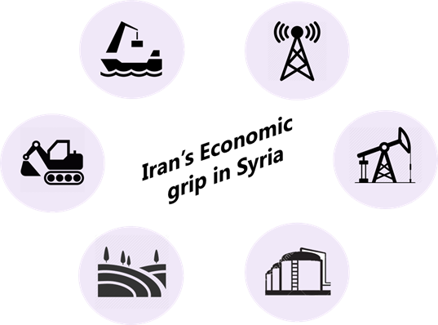
Iran demanded Syrian economic concessions in return for its support. Most importantly in a strategic sense, Iran has received the right to construct a sea port in Syria, ostensibly for commercial, but also for military use.
Iranian Control Over Syria’s Telecommunications Sector
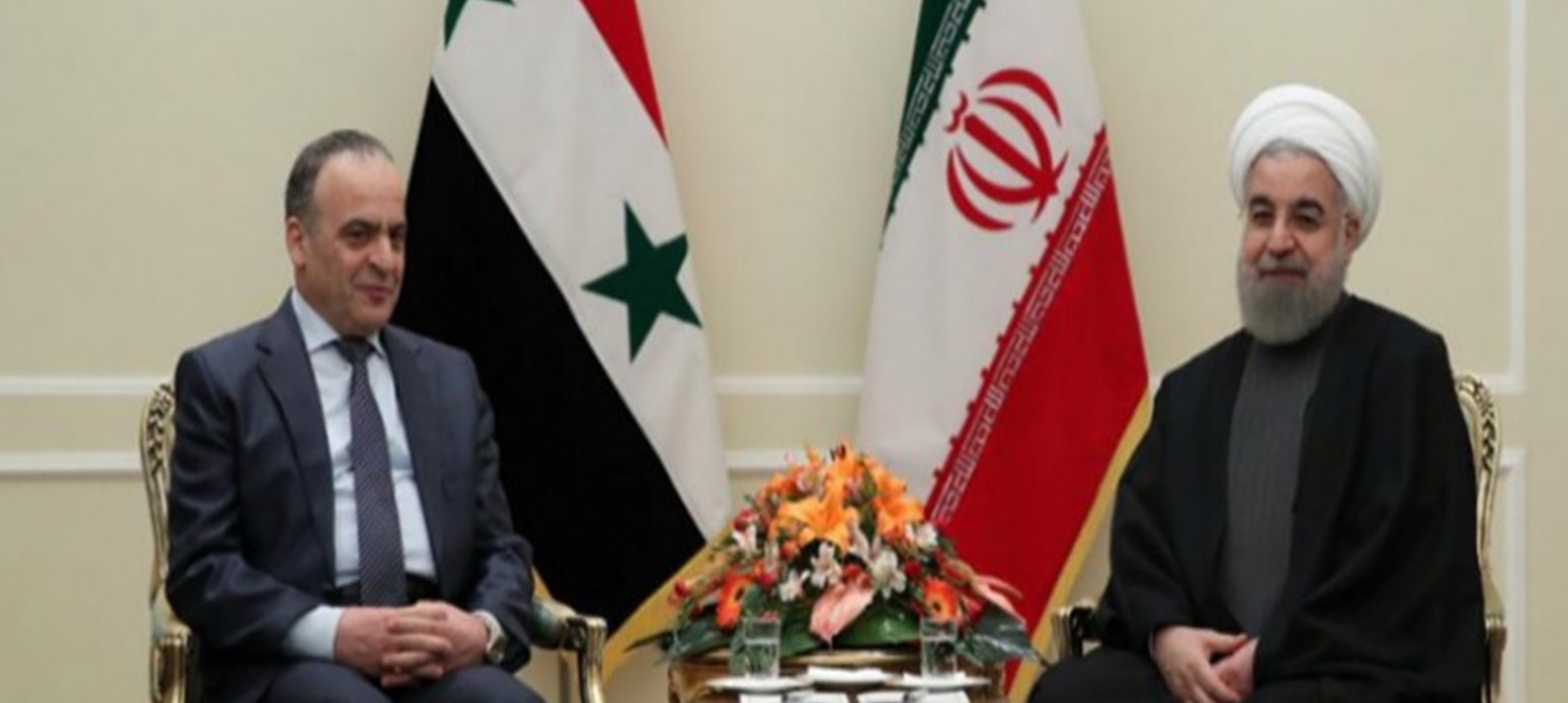
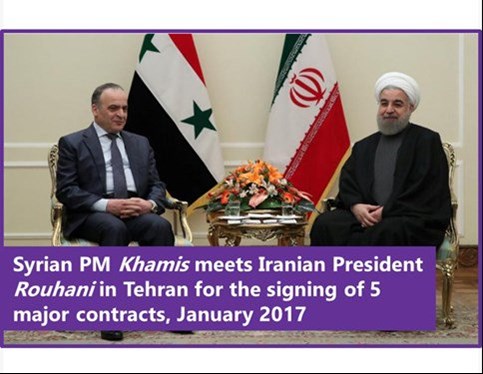
Several other examples show Iran's stringent demands regarding the Syrian economy. The two governments signed five major trade deals in January 2017.
As part of these deals, a subsidiary of the Telecommunication Company of Iran (TCI) was given the rights to become a mobile service provider in Syria, relegating the Syrian owned network to a mere 20% stake. TCI is owned by the IRGC and the Supreme Leader. Control over mobile networks also carries security implications.
Land Allocations and Agricultural Holdings
With the new contracts, Iran received:- 5,000 hectares of coastal land for oil and gas terminals
- 5,000 hectares of agricultural land and Syrian government livestock
Iran’s Role in Syria’s Reconstruction Projects
Iran has also expressed its wish to help with the reconstruction of reconquered areas of Syria. In this regard, the “Iranian Reconstruction Agency” has already declared its first initiatives, most prominently the renovation of 85 schools across the city of Aleppo and its surroundings.
Iranian involvement in the reconstruction of Syria means financial profits for Iranian companies, the acquisition of land and properties and the chance of establishing military infrastructure within the rebuilt cities.
Iran’s Long-Term Economic Position in Syria
In summary, in the past, Iran has strategically positioned itself as the lynchpin of the Syrian economy, by providing the regime with a lifeline of goods and sources of energy. In return, it has taken control of key parts of controlling stake in the economy.
Frequently Asked Questions
Q: How much economic aid did Iran provide to Syria?
A: As of 2018, Iran provided approximately $8 billion in direct economic aid, including oil transfers and credit lines.
Q: What economic concessions did Iran receive in Syria?
A: Iran received rights to construct a port, land allocations for industrial and agricultural use, and influence in Syria’s telecommunications sector.
