What is UN Security Council Resolution 1701 About?
The international community, through the UN Security Council, has demanded multiple times that Hezbollah disarm. Instead, Hezbollah has continually ignored these demands. Hezbollah clearly shows it has no intention of ever laying down its arms.
 28.01.26
 0
0
This is an updated overview of Hezbollah UN 1701 violations since Oct 7. For a deeper dive into UN Resolutions 1701 & 1559, click here.
In 2006, at the end of the Second Lebanon War, during which the IDF fought to remove the threat posed by the Hezbollah terrorist organization along Israel’s northern border, the UN Security Council adopted Resolution 1701. The purpose of Resolution 1701 was to disarm Hezbollah and prohibit the terrorist organization from operating south of the Litani River in Lebanon.
To enforce these provisions and the ceasefire, the UN deployed UNIFIL, the United Nations Interim Force in Lebanon, to monitor southern Lebanon in place of the IDF and ensure that Hezbollah was not rearming and was not capable of threatening Israeli civilians. Resolution 1701 also mandated that the only armed force permitted to operate between the Blue Line – the ceasefire line/unofficial border between Israel and Lebanon, and the Litani River would be Lebanon’s own government forces, not Hezbollah.
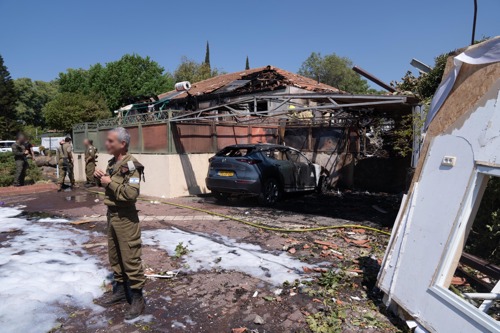
Unfortunately, UNIFIL proved ineffective in implementing Resolution 1701. Beginning after October 7, 2023 – when Hamas terrorists invaded Israeli territory from Gaza, massacred families in their homes, and took hundreds of hostages – Hezbollah fired 17,000 rockets, missiles, and UAVs into Israel, killing dozens of civilians from well-fortified positions south of the Litani River. The world soon came to realize that UNIFIL had failed in its mission.
Israeli intelligence later confirmed longstanding fears that, in the years leading up to October 7, 2023, Hezbollah had been planning its own large-scale invasion of Israeli territory, dubbed “Operation Conquer the Galilee.” Hezbollah intended to murder Israeli civilians and take hostages, mirroring and even surpassing Hamas’s brutality. After Hezbollah began its attacks, 60,000 Israeli civilians were evacuated from northern communities, facing prolonged uncertainty and displacement.
Israel’s military operations in Lebanon following October 7 were highly effective in mitigating the threat posed by Hezbollah. Extensive terrorist infrastructure was dismantled, and thousands of confirmed terrorists were eliminated in what became one of the most precise operations in military history, during which the mobile beepers of Hezbollah operatives detonated simultaneously across the country. In addition, in September 2024, the IDF successfully eliminated Hassan Nasrallah, the former Secretary-General of Hezbollah, who had openly dedicated his life to Israel’s destruction.
In November 2024, another ceasefire agreement was reached between Israel and Hezbollah, allowing the 60,000 displaced Israeli civilians to return to their homes in the north. As in 2006, this agreement required Hezbollah to withdraw north of the Litani River. Once again, however, Hezbollah violated the agreement and continued its terrorist activities near Israel’s northern border, prompting Israeli strikes intended to enforce the ceasefire.
The international community again expects the Lebanese Armed Forces (LAF) to be the sole armed force operating in Lebanon, but Lebanon’s ability to remove terrorist militias from its territory remains limited. Hezbollah continues to violate the ceasefire by creating obstacles. There are legal prohibitions in place that inhibit the LAF from searching private Lebanese homes. Hezbollah exploits this directive by stashing weapons and even building up terrorist infrastructure in backyards.
Hezbollah also clandestinely operates near and around UNIFIL positions to shield its assets from Israeli targeting. Israel has made it clear and proven never to intentionally endanger peacekeeping forces, giving these terrorists a sense of safety. These tactics underscore Hezbollah’s commitment to continued war and terror, and Israel’s right to respond accordingly.
Resolution 1701 offered a path to stability between Israel and Lebanon. The failure of its enforcement allowed Hezbollah to rearm and changed the course of history on Israel’s northern border. Israel learned its lesson from October 7th: the IDF will never allow a terrorist army to threaten our civilians again, from any border.